



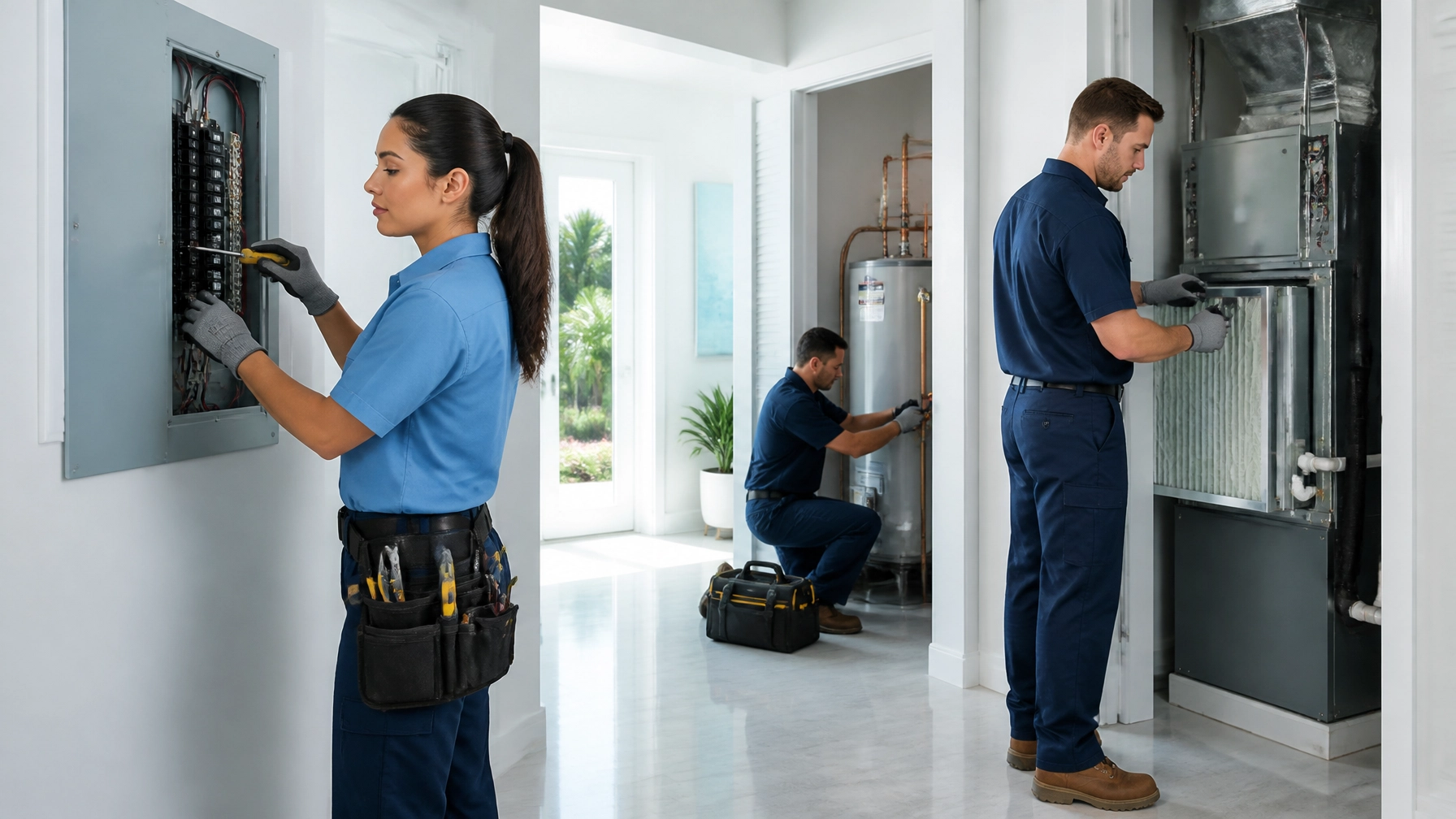
Meta description: Find trusted Florida home pros for plumbing, HVAC, electrical, roofing, and windows. Learn how to verify licenses, plan projects, and avoid costly mistakes.
Florida homeowners manage demanding conditions. Heat, humidity, heavy rain, salt air, and hurricane exposure affect every major home system.
The right contractor protects your property, budget, and project timeline. The wrong contractor creates delays, unsafe work, code problems, and expensive corrections.
Florida Trade Specialists connects homeowners with a vetted network of licensed and insured trade professionals. The directory covers plumbing, electrical, HVAC, roofing, general contracting, code compliance, and other home services across Florida.
Use this guide to identify the right specialist and prepare for common projects.
Licensed professionals reduce project risk
Florida separates contractor licensing into certified and registered categories. According to the Florida Department of Business and Professional Regulation, certified contractors can work throughout the state within their license scope. Registered contractors work in the jurisdictions where they meet local competency requirements.
Plumbing, roofing, air-conditioning, and many electrical projects require trade-specific knowledge. Window installation and replacement also require an appropriate contractor license or specialty license under Florida guidance.
Before hiring, verify:
- Active license status
- Correct license category
- General liability insurance
- Workers’ compensation coverage
- Permit responsibility
- Written project scope
- Warranty terms
- Payment schedule
The DBPR Construction Industry page provides licensing information and public resources. Requirements and permits vary by jurisdiction. Always verify with local authorities or a licensed Florida Trade Specialists professional.
Florida Trade Specialists adds another layer of screening. Businesses submit proof of license and insurance before their listings are approved. Homeowners can browse by trade, city, county, or service category and contact businesses directly through the Florida contractor directory.
Plumbing problems require fast, accurate decisions
Searches for a plumber near me become urgent when water is damaging floors, walls, cabinets, or electrical components.
Call an emergency plumber for active hazards
An emergency plumber florida search is appropriate when you have:
- A burst or uncontrollable pipe
- Water flowing from a ceiling or wall
- A major sewer backup
- No usable water in the home
- A failed water heater leaking onto floors
- A gas odor near a gas appliance
Shut off the nearest fixture valve or main water supply when safe. Do not enter standing water near electrical equipment. If you smell gas, leave the property and contact the gas utility or emergency services before arranging repairs.
Recognize the signs of hidden leaks
The most common leak detection florida warning signs include:
- Unexplained water bill increases
- Sound of running water
- Damp drywall or flooring
- Peeling paint
- Mold or musty odors
- Warm spots on floors
- Cracks near plumbing walls
- Low water pressure
A licensed plumber can use pressure testing, acoustic equipment, thermal imaging, and camera inspection to locate the source without unnecessary demolition. Visit the Florida plumbing services directory to compare licensed plumbing professionals by location.
Plan water heater replacement before failure
Many conventional tank water heaters last approximately 8 to 12 years. Actual service life depends on water quality, installation, maintenance, usage, and tank construction.
Replace the unit when you see:
- Rust-colored water
- Moisture around the tank
- Repeated temperature problems
- Rumbling or popping sounds
- Frequent repairs
- Age beyond the manufacturer’s expected service range
A professional water heater installation florida project includes equipment sizing, shutoff access, drain connections, temperature and pressure relief protection, pan or drain requirements where applicable, and permit review.

HVAC service protects comfort and operating costs
Florida air conditioners operate for long periods. Small maintenance problems become major failures during the hottest months.
Schedule AC maintenance before peak heat
An ac repair florida specialist should inspect the system when it produces weak airflow, inconsistent cooling, unusual odors, water around the indoor unit, short cycling, or rising energy bills.
Homeowners can reduce avoidable strain by:
- Replacing filters on schedule.
- Keeping supply vents open.
- Clearing leaves from the outdoor condenser.
- Checking the condensate drain for blockage.
- Keeping furniture away from return grilles.
- Scheduling professional maintenance before summer.
Do not pour chemicals into a condensate line unless the equipment manufacturer or HVAC professional directs you to do so.
Evaluate the entire system before installation
A new air conditioning installation florida project involves more than selecting an equipment brand.
Ask the HVAC contractor to evaluate:
- Home size and load calculations
- Duct condition and sizing
- Indoor humidity control
- Electrical service capacity
- Condensate drainage
- Equipment efficiency ratings
- Thermostat compatibility
- Outdoor unit placement
- Permit and inspection requirements
Oversized equipment can cycle too quickly and remove less humidity. Undersized equipment can run excessively without maintaining comfort. Proper sizing matters in every Florida county.
Use the Florida HVAC contractor directory to find specialists for installation, repair, thermostats, and indoor air quality services.
Electrical upgrades must match the home’s load
Older homes may not have enough capacity for modern appliances, electric vehicles, pool equipment, backup generators, and high-efficiency HVAC systems.
Plan an electrical panel upgrade
An electrical panel upgrade florida project may be appropriate when:
- The panel lacks available breaker spaces.
- The service cannot support planned equipment.
- The panel shows corrosion or overheating.
- Breakers trip under normal use.
- The home has outdated wiring.
- Insurance or renovation requirements identify deficiencies.
A licensed electrician should perform a load calculation before recommending service size. The project may involve a new panel, service conductors, grounding and bonding improvements, surge protection, labeling, and coordination with the utility provider.
Panel work requires careful planning. It is not a fixture-level repair.
Treat circuit breaker warning signs seriously
A circuit breaker replacement florida project may be required when a breaker feels hot, trips repeatedly, buzzes, smells burned, or shows visible damage.
Do not repeatedly reset a tripping breaker. Do not install a higher-rated breaker to stop nuisance trips. The breaker may be identifying an overloaded circuit, short circuit, loose connection, damaged conductor, or failing appliance.
Turn off the affected circuit when safe. Keep the panel accessible. Have a licensed electrician diagnose the cause before replacing components.
Browse Florida electrical specialists for panel repairs, circuit work, service upgrades, fixture installation, and related electrical projects.

Storm protection starts with compliant installation
Understand the benefits of impact windows
Impact windows florida projects can improve protection against windborne debris, reduce exterior noise, support indoor comfort, and improve security. They can also reduce air leakage when the products and installation are correctly selected.
Ask for:
- Product approval documentation
- Wind-load design information
- Proper opening measurements
- Installation details
- Permit responsibility
- Manufacturer warranty
- Installer warranty
Impact-rated products do not compensate for incorrect installation. The contractor must address the opening, fasteners, anchorage, flashing, sealants, and surrounding structure.
Florida DBPR identifies window installation and replacement as work requiring an appropriate license or specialty license. Local requirements may also apply.
Plan roof replacement before storm season
A roof replacement florida project requires more than selecting shingles or tile. Start with a documented roof inspection.
Discuss:
- Roof age and condition
- Decking and fascia
- Flashing
- Underlayment
- Ventilation
- Drainage
- Roof-to-wall connections
- Wind mitigation features
- Material approvals
- Permit and inspection steps
Roofing contractors have a defined license category in Florida. Roofing work should not be assigned to an unlicensed worker or general laborer operating outside the licensed contractor’s supervision.
Obtain a written estimate that separates labor, materials, disposal, structural repairs, permits, taxes, and change-order terms. Avoid signing under pressure after a storm. Document damage with photographs and contact your insurer before authorizing major work when an insurance claim may be involved.

Florida Trade Specialists simplifies the hiring process
Homeowners do not need to search separate anonymous listings for every trade. Florida Trade Specialists brings multiple categories into one network.
The process is direct:
- Search by trade or location.
- Review license, insurance, coverage, and business details.
- Contact the specialist directly.
- Confirm scope, permits, pricing, and scheduling.
- Keep the contract and inspection records.
The platform covers Florida homeowners across plumbing, HVAC, electrical, roofing, remodeling, windows and doors, painting, concrete, and related services. Availability varies by trade and location, so confirm service coverage before scheduling.
Frequently asked questions
How do I verify a Florida contractor?
Search the contractor through the state’s DBPR license resources. Confirm the license is active and matches the work being proposed. Also request current insurance and workers’ compensation information.
Does every home project require a permit?
No. Permit requirements depend on the work, property, and local jurisdiction. Plumbing, electrical, HVAC, roofing, structural, and window projects commonly require permit review. Confirm with the local building department or the responsible licensed contractor.
Should I hire one contractor for every project?
No. Use the license category and project scope to select the right specialist. A plumbing contractor, electrical contractor, HVAC contractor, roofing contractor, or window specialist may each be required for different work.
What should a written estimate include?
The estimate should identify the contractor, license information, materials, labor, exclusions, permits, payment schedule, warranty, start date, completion terms, and change-order process.
Choose verified trade expertise for your Florida home
Licensed specialists protect safety, compliance, workmanship, and long-term value. Verification matters for every project, from emergency plumbing and leak detection to air-conditioning installation, panel upgrades, impact windows, and roof replacement.
Florida Trade Specialists gives homeowners a direct way to find licensed and insured professionals across Florida. Browse the verified contractor directory and select the trade specialist that matches your project.
Requirements and permits vary by jurisdiction. Always verify with local authorities or a licensed Florida Trade Specialists professional.