



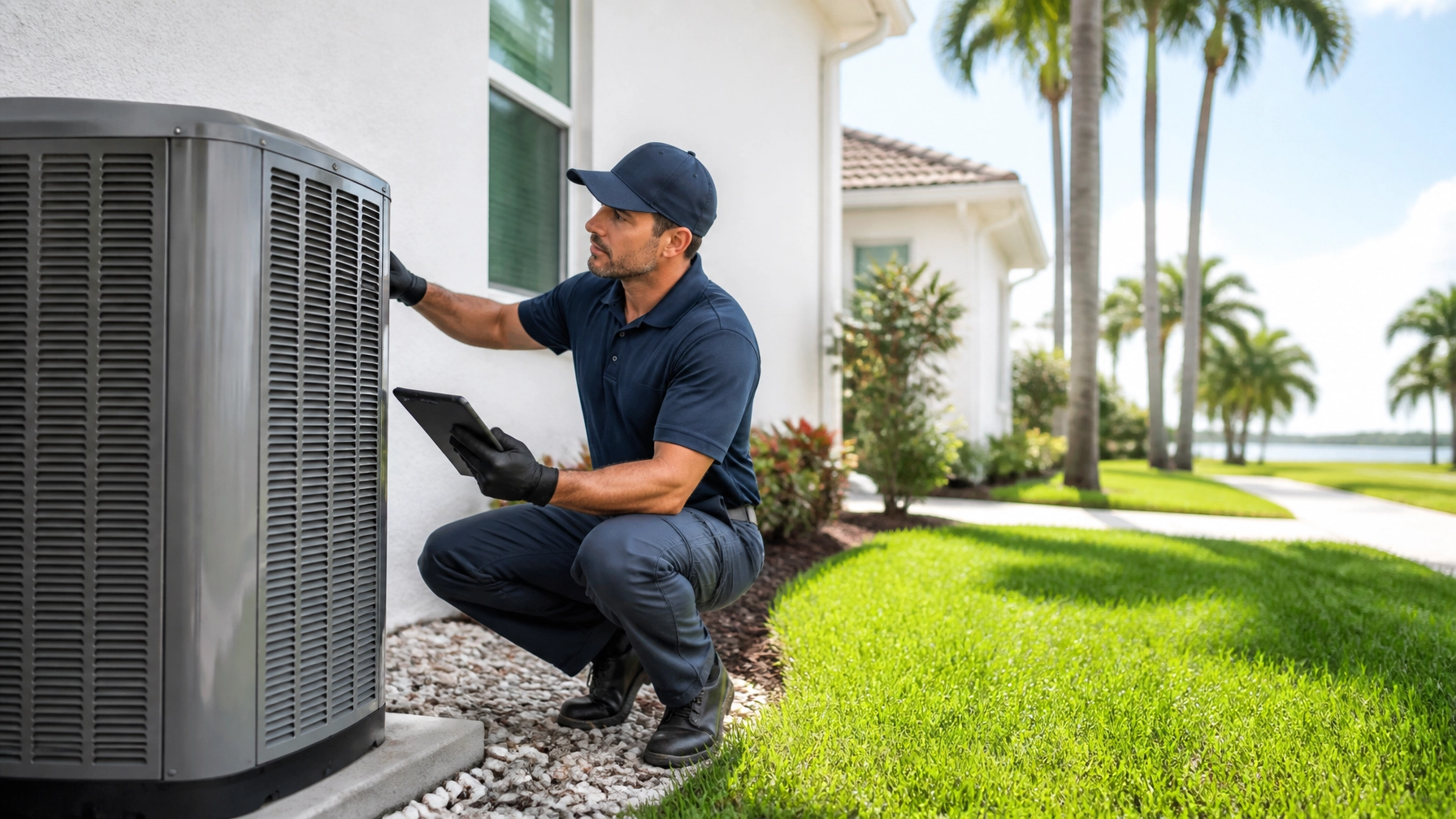
Florida heat exposes HVAC mistakes. Fast.
AC repair Florida work fails for the same reasons every season. Dirty airflow. Bad diagnostics. Unsafe electrical. Ignored drainage. Unlicensed labor.
Small errors become compressor damage. Ceiling stains. Mold. High bills. Short cycling. Warranty disputes.
This list isolates the seven failures. Each fix is concrete. Each fix is cheaper than a breakdown in July.
Mistake #1 : You treat “no cooling” as a DIY job
DIY stops at filters. DIY stops at clearing debris. DIY stops before panels open.
Beyond that, risk spikes.
What goes wrong
- Electrical shock
- Refrigerant violations
- Misdiagnosis
- Compressor damage
- Voided warranties
Capacitors. Contactors. Low-voltage controls. Refrigerant circuits.
Wrong move. Expensive outcome.
Fix
- Do only these:
- Replace filter
- Clear condenser area
- Confirm thermostat settings
- Stop here:
- Any burning smell
- Any buzzing at the air handler
- Any breaker trip
- Book ac repair florida with a licensed technician.
Florida Trade Specialists routes licensed HVAC pros statewide. One network. Zero guesswork.
Use this for related work that can be found during HVAC diagnosis: HVAC installation and repair.
Mistake #2 : You keep running the system with a clogged filter
A clogged filter is airflow restriction. Airflow restriction is coil freeze risk. Coil freeze risk is compressor stress.
Florida run-time is long. Filters load fast.

What goes wrong
- Frozen evaporator coil
- Weak airflow
- Higher kWh use
- Humidity stays high
- Blower motor strain
Fix
- Check monthly during heavy cooling months.
- Replace on a schedule:
- 1 inch filters: every 30–60 days
- Thicker media filters: per manufacturer interval
- Match the filter to the system. No “highest MERV” guessing.
If airflow stays weak after a filter change, stop “trying things.” Book a diagnostic.
Mistake #3 : You chase the cheapest quote and skip license checks
Unlicensed HVAC work is a compliance problem. It is also a safety problem.
Bad work looks fine for a week. Then it fails under load.
What goes wrong
- Improper refrigerant handling
- Code violations
- Unsafe electrical
- Leak not found
- No insurance coverage
Fix
- Verify:
- State licensing
- Liability insurance
- Work scope in writing
- Reject:
- Cash-only pressure
- “No need for permit” talk
- “We can top off refrigerant” with no leak plan
Florida Trade Specialists uses licensed specialists. That is the network rule.
If credentials cannot be verified, the listing is denied.
Mistake #4 : You assume it is “low refrigerant” and ask for a top-off
Refrigerant is not fuel. Refrigerant does not get “used up.”
Low charge means a leak. Leak means repair strategy.

What goes wrong
- Leak grows
- Coil damage
- Compressor overheating
- Repeat service calls
- Higher total cost
Fix
- Demand a leak-focused workflow:
- Confirm superheat/subcooling
- Inspect coils and flare/braze points
- Pressure test when needed
- Repair leak source
- Evacuate and weigh in charge to spec
- Stop paying for “top-offs” with no documentation.
This is core ac repair florida competence. Anything less is churn.
Mistake #5 : You set the thermostat too low and blame the unit
AC systems cool at a fixed rate. Setpoint does not change that rate.
A 68°F setting does not cool faster. It just runs longer.

What goes wrong
- Short cycling from control issues
- Overrun from unrealistic setpoints
- Humidity discomfort
- Higher bills
- Premature wear
Fix
- Use stable setpoints.
- Use schedules. Use setbacks.
- Upgrade the control when needed.
Thermostat issues also hide electrical issues. Bad wiring. Bad transformer. Bad float switch interrupts.
If the system behaves erratically, include electrical diagnostics.
For homes needing broader safety work, keep this on your radar: electrical panel upgrade florida and circuit breaker replacement florida. HVAC problems and weak panels collide during peak load.
Mistake #6 : You ignore condensate drainage until you get ceiling stains
Florida humidity is constant. Your AC is a dehumidifier.
Water must exit through the condensate system. When it does not, damage starts.

What goes wrong
- Clogged drain line
- Overflowed drain pan
- Ceiling drywall damage
- Mold conditions
- Float switch trips and “no cooling”
Fix
- During maintenance, require:
- Drain line inspection
- Pan inspection
- Float switch test
- Proper trap configuration where required
- Treat recurring clogs as a root-cause problem:
- Poor slope
- Bio-growth load
- Pan corrosion
- Duct sweating
If water damage appears, other trades may be needed fast. That is common in Florida homes.
Mistake #7 : You skip maintenance and only call when it breaks
Reactive HVAC service costs more. It also happens at the worst time.
Florida summer creates demand spikes. Wait times rise.
What goes wrong
- Dirty coils
- Loose electrical connections
- Worn capacitors
- Drain clogs
- Low airflow from duct and blower issues
Fix
- Schedule service before peak season.
- Require documented checks:
- Coil condition
- Temperature split
- Static pressure checks
- Electrical readings
- Drain system function
Maintenance also catches non-HVAC issues that impact comfort:
- Duct leaks
- Attic insulation gaps
- Window heat gain
That ties into other high-impact Florida upgrades. Impact windows florida reduces load. It reduces run-time. It reduces breakdown frequency.
Florida homeowners also miss the “whole-home” triggers
AC failures are not isolated.
Common chain reactions:
- Roof problems raise attic temps. AC runs harder.
Keyword relevance: roof replacement florida. Use this guide: The homeowner’s guide to roof replacement in Florida - Hidden leaks raise indoor humidity. AC runs longer.
Keyword relevance: leak detection florida. Use this resource: Leak detection Florida: 10 things you should know - Old water heater closets and drains overflow and mimic AC leaks.
Keyword relevance: water heater installation florida. Use this guide: Water heater installation Florida
One network matters when the problem crosses trades.
Practical checklist : what to do before you book AC repair
Use this list. Keep it tight. Don’t improvise.
Confirm
- Thermostat: cool mode
- Setpoint: reasonable
- Filter: clean
- Breaker: not tripped
- Return grille: not blocked
Stop and call
- Burning smell
- Screeching noise
- Repeated breaker trip
- Ice on lineset
- Water around air handler
If you also need a plumber near me for water damage sources, route it correctly. HVAC leaks and plumbing leaks get confused. The fix is different.
Emergency scenario rules:
- Shut off the system
- Protect floors and drywall
- Call a licensed pro
That overlaps with emergency plumber florida needs when a supply line or water heater is involved.
Florida code and permitting reality
Some HVAC replacements and major alterations trigger permits. Some jurisdictions enforce details differently. Miami-Dade. Broward. Orange. Polk. St. Lucie. Every county has process differences.
Authoritative baseline reference:
- Florida Building Code main portal: https://floridabuilding.org/
Disclaimer: Requirements and permits vary by jurisdiction. Always verify with local authorities or a licensed Florida Trade Specialists professional.
Conclusion : fix the failure pattern, not the symptom
AC repair Florida outcomes depend on process. Not luck.
Stop these seven failures:
- DIY beyond basics
- Dirty filters
- Unverified licensing
- Refrigerant “top-off” thinking
- Thermostat misuse
- Ignored condensate drainage
- Reactive-only service
Use licensed specialists. Use documented diagnostics. Use multi-trade coordination when needed.
Command: Schedule licensed ac repair florida through Florida Trade Specialists. Use the statewide network at https://floridatradespecialists.com/.
FAQ
What is the first thing to check when AC stops cooling in Florida?
Check thermostat mode and setpoint. Check the air filter. Check the breaker. Stop if you smell burning or see ice.
Why does my AC run but the house stays humid?
Airflow problems and dirty coils cause poor latent removal. Duct leakage and oversizing also drive humidity issues. Drain problems can shut systems down.
Is it normal to need refrigerant every year?
No. Refrigerant loss indicates a leak. Leak detection and proper recharge to manufacturer specs is required.
How do I know if the water leak is AC or plumbing?
AC leaks occur near the air handler and drain line. Plumbing leaks can appear anywhere and may continue when the AC is off. When unsure, schedule leak detection florida with a licensed specialist.